Want to pick up guitar without breaking the bank? Private lessons cost around €25/hour, and music schools limit your schedule. As an experienced guitarist who's guided countless beginners, I've self-taught and refined these free, effective methods to master the basics on your own.
To start, you need a guitar—borrow from a friend, snag a used one affordably, or buy new. Skip overpriced outlets like Milonga; choose reputable spots like Woodbrass for better selection and value. Left-handed players: options are scarcer and pricier, so plan ahead.
Most crucially, bring a strong dose of motivation. No shortcuts—dedication makes it possible for anyone. If it's a passing whim, reconsider.
Focus on core open chords that form the backbone of pop, rock, folk, and more: C, D, Dm, E, Em, G, A, Am. (English names dominate online: C=Do, D=Re, etc.)
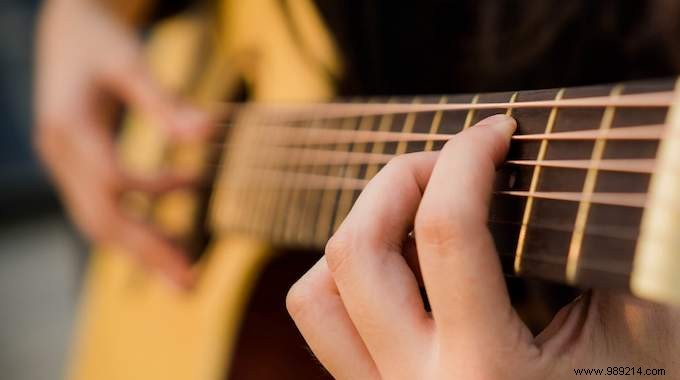
Study finger positions via reliable tutorials, memorize them, and practice clean strums. Press firmly for clear notes.
Finger pain is normal—persist with precise placement. Link chords in sequences, accelerating transitions. Pair with a simple 4/4 rhythm (plenty on YouTube) until it's second nature.
Apply it: strum G-D-Am for "Knockin' on Heaven's Door." Congrats—you're playing guitar!
F (Fa) is essential. Barre all strings with your index finger—build strength gradually. Pro tip: Capo on fret 2 or 3 softens string tension for easier presses.
Incorporate F into your progressions.
Progress through repetition and real songs. Fluency builds fast. Tabs at Ultimate-Guitar, ABC Tabs, or Songsterr.
Sing along or jam with friends to lock it in.
Trust your ear over tabs—experiment to train it. Skip solos (à la Hendrix) until basics are solid. Patience pays off; no teacher required.
Questions? Drop them in comments—happy to help from my years of playing and coaching.
Skip €25/hour weekly lessons: 3 months saved equals €300. All with motivation and these techniques.
