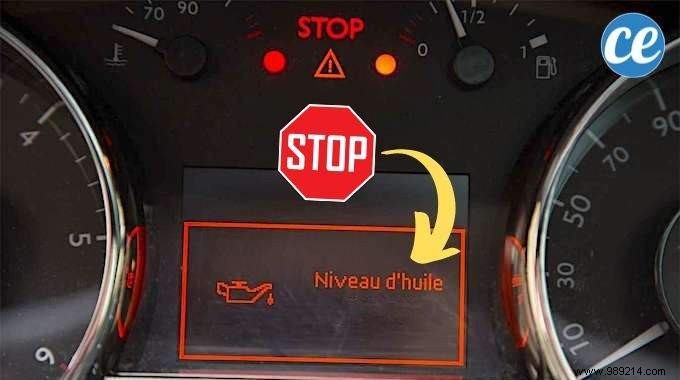
Engine oil lubricates all moving parts, preventing friction and overheating. Driving with low oil risks breakdowns, accelerated wear, and even complete engine failure.
Checking your oil level is simple and takes just one minute. As automotive experts with years of hands-on experience, we've streamlined this essential maintenance task for you.
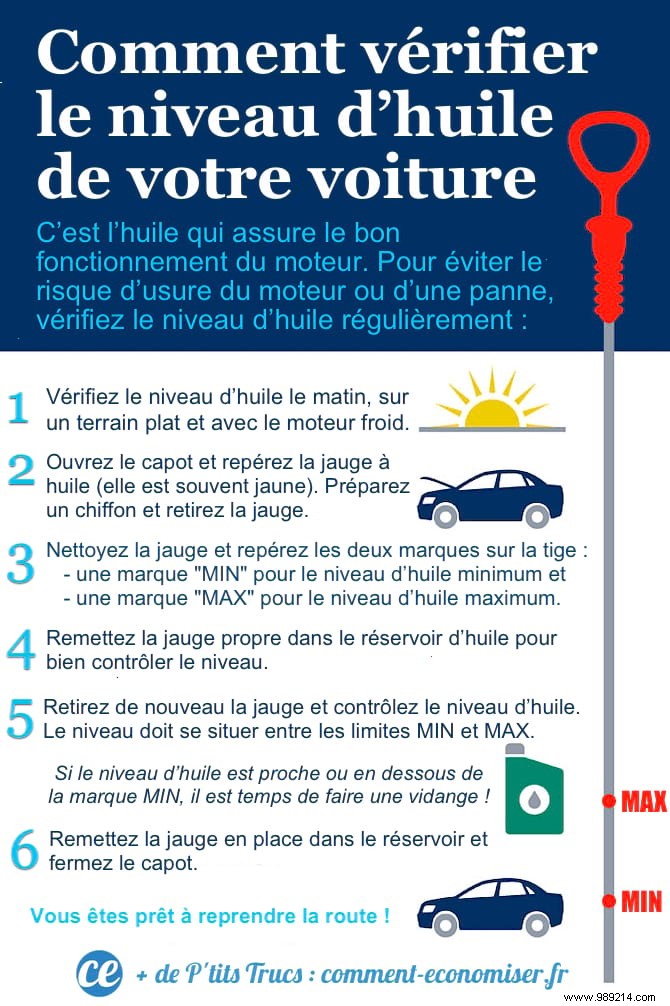
Click here to easily print this guide in PDF.
1. Perform the check in the morning on flat ground with a cold engine. This ensures oil has drained back into the sump for an accurate reading.
Never check on a hot engine—you risk severe burns.
2. Open the hood and locate the oil dipstick, typically a yellow-handled metal rod inserted into the oil sump.
Prepare your rag and pull it out carefully.
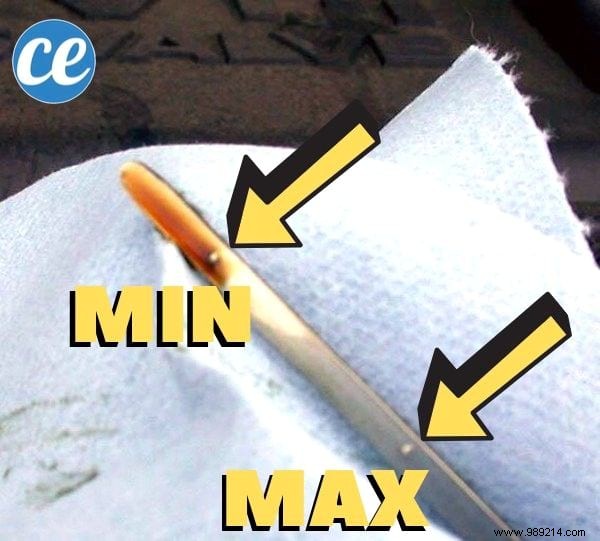
3. Wipe the dipstick clean with the rag. Note the MIN (minimum) and MAX (maximum) marks.
4. Fully reinsert the clean dipstick into the sump.
5. Pull it out again and read the level—it should be between MIN and MAX. If near or below MIN, schedule an oil change immediately.
6. Secure the dipstick (screw in if applicable) and close the hood. You're good to go.
Check every 2,000 km or before long trips.
Hold the dipstick horizontally for accuracy—tilting can give false highs.
Monitor dashboard oil indicators:
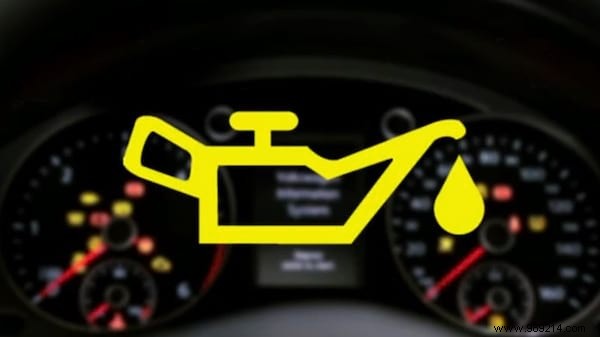
Orange light: Low oil—top up ASAP.
Red light: Critical low pressure—stop driving immediately to avoid engine destruction.
No funnel? Use a screwdriver to pour oil safely (see our related tip).
This method works for all models: Volkswagen (Polo, Golf), Citroën (C3), Peugeot (308, 207), Volvo, Mercedes, and more.
Try this trusted method and share your results in the comments. Safe driving!
